The Endoscopic Deep Plane Facelift with Dr. Tansavadti

At Tansavatdi Facial Plastic Surgery, Dr. Kristina Tansavatdi uses an endoscopic deep plane facelift approach for select patients with early to moderate facial aging, mild jowling, midface descent, deepening nasolabial folds, or early heaviness around the mouth and lower face. This technique allows Dr. Tansavatdi to release key facial ligaments, directly lift descended cheek and lower face fat pads, and restore facial support with carefully placed cable sutures — all while preserving natural expression, facial movement, and skin integrity.

For the right candidate, an endoscopic deep plane facelift can create a refreshed, natural-looking result with smaller incisions, faster healing, and no visible incision in front of the ear.

On This Page

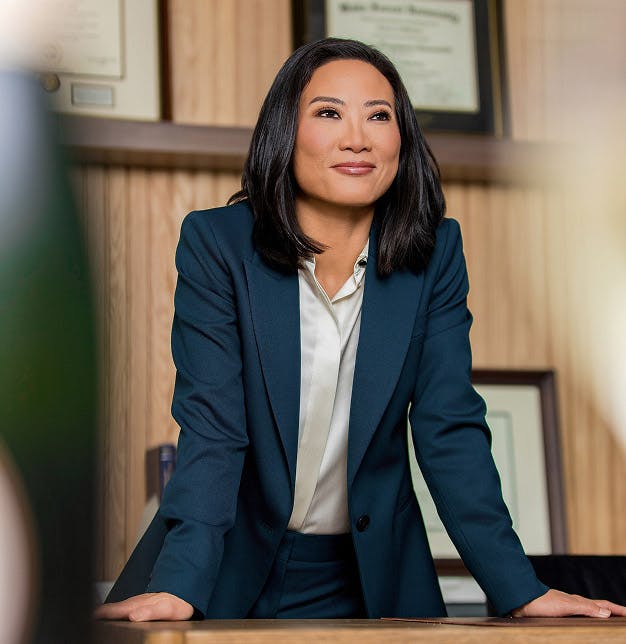
Woman smiling

Expert Surgical Technique Rooted in Facial Anatomy

Dr. Kristina Tansavatdi is a double board-certified, fellowship-trained facial plastic surgeon specializing in surgery of the face and neck. Deep plane facelift surgery is one of the procedures she performs most often, and her endoscopic deep plane facelift technique reflects years of studying facial anatomy, facial aging, expression, and natural tissue movement.

Her approach is not simply about lifting the face. It is about understanding how the face has changed over time — how the cheek fat pads have descended, how the nasolabial folds have deepened, how early jowling has formed, and how the face moves when the patient smiles, blinks, and expresses.

By using endoscopic visualization, Dr. Tansavatdi is able to work with a magnified view of the deeper facial anatomy. This allows her to see delicate structures more clearly, including small facial nerve branches that are important to lower eyelid and orbicularis muscle movement. The goal is to create meaningful improvement while preserving what makes the patient look natural, expressive, and authentically like themselves.

What Is an Endoscopic Deep Plane Facelift?

An endoscopic deep plane facelift is a modern variation of deep plane facelift surgery that uses small hidden incisions and an endoscope — a slender camera — to access and lift the deeper structures of the face.

Like other deep plane facelift techniques, the procedure works beneath the superficial layers of the face. It focuses on releasing facial retaining ligaments and repositioning descended facial fat pads and soft tissues rather than pulling the skin.

This is important because facial aging does not happen only in the skin. With time, the cheek fat pads descend, the nasolabial folds become deeper, the area near the corners of the mouth becomes heavier, and early jowling can appear along the jawline. An endoscopic deep plane facelift addresses these deeper changes directly while minimizing skin elevation.

Background media

How Dr. Tansavatdi’s Endoscopic Deep Plane Technique Works

Dr. Tansavatdi’s endoscopic deep plane facelift technique uses a separate temple incision, typically designed in a way that also allows access for an endoscopic temporal brow lift when appropriate. This incision gives access to the upper and midface.

A second smaller incision is placed under the tuft of sideburn hair to approach the midface and lower face. Through these smaller access points, Dr. Tansavatdi can work in the deep plane while avoiding a visible incision in front of the ear. During surgery, key retaining ligaments of the face are released, including the zygomaticocutaneous ligaments. This release is what allows descended tissues to move naturally back into a more supported position.

The descended fat pads of the cheeks and the fat pads near the corners of the mouth are then lifted directly with cable sutures. This creates a more directed lift of the face without pulling on the skin. Because the skin is not widely elevated, the skin’s blood supply is better preserved, which may support faster revascularization and a smoother recovery.

Schedule a Consultation

(805) 243-0640 Contact Us
Contact us media

Why Endoscopic Visualization Matters

One of the major advantages of the endoscopic approach is visualization.

With the endoscope, Dr. Tansavatdi has a magnified view of the deeper facial anatomy. This is especially valuable in the midface, where small facial nerve branches help control movement around the lower eyelid and orbicularis muscle.

In open deep plane facelift surgery, the midface can be approached through a more traditional exposure. However, small facial nerve branches in this area may be more vulnerable because they are not always seen as clearly. Injury or irritation to these branches can contribute to weakness or a slow eye blink.

The endoscopic approach gives Dr. Tansavatdi more precise visual access to these delicate structures as she releases the ligaments and lifts the midface. This is one reason she values the technique for the right patient.

Woman smiling

Patient Testimonials

"I initially went to meet with Dr. Tansavatdi because she had gotten excellent Yelp reviews. So now I'll pay it forward to someone else trying to find a good plastic surgeon.

I was impressed from the first visit. She took time to understand my goals and reasons for want...

"I initially went to meet with Dr. Tansavatdi because she had gotten excellent Yelp reviews. So now I'll pay it forward to someone else trying to find a good plastic surgeon.

I was impressed from the first visit. She took time to understand my goals and reasons for wanting to change my face (I had just turned 60 and had been developing jowls which bothered me). I told her I wanted it to look natural, and not fake like some movie stars or people my age trying to look 30. She understood, showed me example photos, and suggested I have a deep plane face lift and also consider getting fat injected under my eyes. I had noticed for many years that I had hollows under my eyes, but I didn't know you could do anything about it. I decided to do both. She then clearly explained what I could expect from the surgery and what it would and would not fix.

Throughout the process, I felt I was in good hands, which was important because after all, it's my face! She and her staff were very professional and gave me detailed daily instructions about what to do, eat, and pills to take in the weeks before and the month after the surgery. She had videos I could watch so I knew exactly what to expect. She had several follow up visits with me to make sure I was doing well. The areas under my eyes were bruised and puffy for a while, so she injected them with something and zapped them with a laser (no extra charge) to speed up healing.

Now it's 4 months after the surgery, and I am so happy with the results! I no longer have jowls, and I'm so glad I took her advice about the hollows under my eyes because my face looks much younger and healthier with those gone. A few weeks ago, I was getting dressed up to go out and looked at my face in the mirror and thought, "I look pretty!" It had been many years since that thought had popped into my head.

I'm very glad I chose to trust her with my face."

S.M.

"I cannot possibly find enough good things to say about Doctor T and her entire staff. Dr. T did a rhinoplasty and deep neck lift for me. The results are outstanding. She is so knowledgeable and professional. She pays the very most attention to detail. She is kind and she is a...

"I cannot possibly find enough good things to say about Doctor T and her entire staff. Dr. T did a rhinoplasty and deep neck lift for me. The results are outstanding. She is so knowledgeable and professional. She pays the very most attention to detail. She is kind and she is attentive. Her staff is also unparalleled. Prepare to be WOW'ed by your experience and results!"

Jordan B.

This review is from my mother Rose who recently had a comprehensive facelift and both a upper and lower eyelid lift. She found Dr. T through Yelp based on all her fantastic reviews and honestly couldn't agree more. Dr. T is professional, thorough, understanding and makes sure ...

This review is from my mother Rose who recently had a comprehensive facelift and both a upper and lower eyelid lift. She found Dr. T through Yelp based on all her fantastic reviews and honestly couldn't agree more. Dr. T is professional, thorough, understanding and makes sure you are comfortable with all aspects of your procedure. Not only is Dr. T fantastic at what she does but she is an expert in her field. My mother was beautiful before her surgery and Dr. T enhanced my mothers natural beauty in a way that captured how she felt inside! 50 going on 35! Our family will continue to recommend Dr. T and her wonderful staff to all our friends and family! If you are feeling apprehensive or unsure Dr. T will provide you with all the answers you need to start this new chapter in your life! I should also mention her new facility is so beautiful! You can see all the hard work Dr.T and her staff put into it to make her clients feel welcome!

Abby B.

“I have worked with many surgeons as an RN. I wouldn’t go to anyone else for my face! I am almost one year post op and look great.”

Dana K.

"Great team & masterful plastic surgeon specializing in face & neck. I had many consultations all around & after seeing Dr Tansadvati’s work, meeting her & her staff I was convinced I was in the right place & in the best hands. I highly recommend Dr T. beca...

"Great team & masterful plastic surgeon specializing in face & neck. I had many consultations all around & after seeing Dr Tansadvati’s work, meeting her & her staff I was convinced I was in the right place & in the best hands. I highly recommend Dr T. because she will tailor her work according to your individual needs & provide a natural result. She’s got the artistic eye & skill to make you look your best and conserve your natural expression. People will wonder and only the daring will ask: “How is it that you look so good. What is your secret?”"

Giga A.

"Dr. Tans did an amazing job on my upper/lower eyelid surgery! I’m so pleased and happy at how it turned out. Dr. Tans and her staff were wonderful and treated me with kindness and respect. I totally trust her and will definitely be back for another procedure! Thank you for gi...

"Dr. Tans did an amazing job on my upper/lower eyelid surgery! I’m so pleased and happy at how it turned out. Dr. Tans and her staff were wonderful and treated me with kindness and respect. I totally trust her and will definitely be back for another procedure! Thank you for giving me back my confidence!"

Susie L.

"I just loved Dr. T and her team. Everyone is wonderful and really care about their patients. I am 57 and got an endoscopic deep plane facelift with fat transfer, underbleph and eye brow lift and i am very happy with the results. It has been a month and so far so good. No pain...

"I just loved Dr. T and her team. Everyone is wonderful and really care about their patients. I am 57 and got an endoscopic deep plane facelift with fat transfer, underbleph and eye brow lift and i am very happy with the results. It has been a month and so far so good. No pain at all. Dr. T has magic hands; she is excellent a what she does and she is a master in endoscopic surgery. I definitely recommend her and her staff. You will be in great hands with her."

Diana P.
Doctor media

What Areas Can an Endoscopic Deep Plane Facelift Improve?

An endoscopic deep plane facelift can improve early to moderate changes in the midface, lower face, and jawline.

It may help address:

  • Early cheek descent
  • Midface sagging
  • Deepening nasolabial folds
  • Heaviness near the corners of the mouth
  • Early marionette lines
  • Mild jowling
  • Loss of soft cheek contour
  • Early lower face heaviness
  • Facial aging caused by descended fat pads
  • A tired or heavier facial expression

This procedure is best for patients who need deeper structural lifting but do not yet have a large amount of loose skin.

Benefits of an Endoscopic Deep Plane Facelift

An endoscopic deep plane facelift offers several potential benefits for the right candidate.

Smaller, More Hidden Incisions

The technique uses hidden incisions in the temple and beneath the sideburn hair tuft. Because there is no visible incision in front of the ear, this approach can be appealing to patients concerned about incision visibility.

Direct Lift of Descended Fat Pads

The cheek fat pads and fat pads near the corners of the mouth are lifted directly with cable sutures. This allows for a more targeted and intentional lift of the midface and lower face.

Less Reliance on Skin Pulling

Because the deeper tissues are released and repositioned, the result does not depend on pulling the skin tight. This helps preserve a natural, unoperated appearance.

Release of Key Facial Ligaments

Dr. Tansavatdi releases important retaining ligaments, including the zygomaticocutaneous ligaments, allowing the face to move more naturally into a restored position.

Better Visualization of Delicate Nerve Branches

The endoscope provides a magnified view of the surgical field, including small facial nerve branches near the lower eyelid and orbicularis muscle. This helps Dr. Tansavatdi work with greater visual control in a delicate area.

Faster Healing for the Right Patient

Because the skin is not widely elevated, the skin’s blood supply is better preserved. This may allow for faster revascularization and a smoother recovery compared with more extensive skin elevation.

Natural Expression and Movement

The goal is to restore support while preserving natural facial movement, blink, smile, and expression.

Background media

Stay Connected With Us

Endoscopic Deep Plane Facelift vs. Open Deep Plane Facelift

Both endoscopic deep plane facelift surgery and open deep plane facelift surgery work at a deeper structural level than skin-only facelift techniques. The difference is in the access, incision pattern, degree of skin elevation, and type of patient best suited to each approach.

An endoscopic deep plane facelift is often best for patients with earlier aging, good skin quality, mild jowling, and less loose skin. It uses smaller hidden incisions and avoids a visible incision in front of the ear.

An open or extended deep plane facelift may be better for patients with more advanced laxity, heavier jowls, significant loose skin, more neck aging, or the need for greater skin redraping.

Dr. Tansavatdi offers both approaches and will recommend the technique that best fits the patient’s anatomy, goals, skin quality, and degree of facial aging. The best facelift is not the smallest procedure. It is the procedure that correctly addresses the patient’s anatomy.

Banner media

Who Is a Candidate for an Endoscopic Deep Plane Facelift?

The best candidates for an endoscopic deep plane facelift are often patients in their late 30s, 40s, or 50s who are noticing early to moderate facial aging but do not yet have significant loose skin.
You may be a candidate if you have:

  • Early or mild jowling
  • Midface descent
  • Deepening nasolabial folds
  • Early marionette lines
  • Heaviness near the corners of the mouth
  • Good skin quality
  • Minimal loose skin
  • A desire for natural-looking facial rejuvenation
  • Concerns about visible incisions in front of the ears

Some patients in their 60s may also be candidates if they have very good skin quality or have had a previous facelift where excess skin has already been removed.

Patients with more advanced skin laxity, heavier neck bands, significant jowls, or excess loose skin may be better candidates for an extended deep plane facelift and neck lift.

wood

Why Skin Quality Matters

Skin quality is one of the most important factors in determining whether an endoscopic deep plane facelift is appropriate.

Because this technique does not involve wide skin elevation or major skin removal, it works best when the skin can redrape naturally after the deeper tissues are lifted. Patients with significant loose skin may not achieve the best result with an endoscopic approach alone.

During consultation, Dr. Tansavatdi will evaluate the skin, the deeper facial tissues, the neck, prior surgery history, filler history, and the degree of facial descent before recommending the right technique.

Endoscopic Deep Plane Facelift and Temporal Brow Lift

The temple incision used for Dr. Tansavatdi’s endoscopic deep plane facelift is typically designed in a way that can also allow access for an endoscopic temporal brow lift when appropriate.

This is important because the upper face, brow, temples, and midface age together. In some patients, subtle brow descent and midface descent contribute to heaviness around the eyes and upper cheeks.

When indicated, combining an endoscopic temporal brow lift with endoscopic deep plane midface and lower face lifting can help restore balance across the upper and midface without making one area look overcorrected.

Banner media

Endoscopic Deep Plane Facelift and Full Face Rejuvenation

An endoscopic deep plane facelift may be part of Dr. Tansavatdi’s larger facial rejuvenation strategy.

For some patients, the procedure may be combined with:

  • Endoscopic temporal brow lift
  • Upper eyelid surgery
  • Lower eyelid surgery
  • Facial fat transfer
  • Nano fat transfer
  • Neck lift
  • Skin quality treatments
  • Nonsurgical maintenance

When combined thoughtfully, these procedures can help restore balance across the face while preserving natural expression and identity.

The purpose is not to do more surgery. The purpose is to choose the right combination of procedures so the final result looks cohesive and natural.

Why Choose Dr. Tansavatdi for an Endoscopic Deep Plane Facelift?

Dr. Kristina Tansavatdi specializes in surgery of the face and neck and is known for natural-looking facial rejuvenation. Her approach to endoscopic deep plane facelift surgery reflects her deeper philosophy: study the face, understand the person, and restore what has changed without changing identity.

Patients choose Dr. Tansavatdi because:

  • She is a double board-certified facial plastic surgeon
  • She is fellowship-trained in facial plastic and reconstructive surgery
  • She specializes in deep plane facelift surgery
  • She focuses exclusively on the face and neck
  • She uses endoscopic visualization for select deep plane facelift patients
  • She studies facial movement, expression, and anatomy
  • She reviews older photos to understand each patient’s aging pattern
  • She creates natural-looking results designed to preserve identity
  • She offers a warm, supportive, women-led practice environment

Dr. Tansavatdi’s goal is not to make the face look pulled or operated on. It is to restore support so the patient looks refreshed, balanced, and still like themselves.

Banner media

What to Expect During Consultation

Your consultation with Dr. Tansavatdi includes a detailed evaluation of your face, neck, skin quality, and surgical goals. She may evaluate:

  • Facial structure
  • Midface descent
  • Nasolabial folds
  • Marionette lines
  • Jowling
  • Skin quality
  • Neck anatomy
  • Brow and eyelid position
  • Facial movement and expression
  • Prior surgery history
  • Prior filler history
  • Older photographs, when available

Dr. Tansavatdi will determine whether you are best suited for an endoscopic deep plane facelift, open deep plane facelift, neck lift, full face rejuvenation, or another approach.

Before the Procedure

Before surgery, Dr. Tansavatdi and her team will prepare you with detailed preoperative instructions. This may include medication guidance, supplement recommendations, recovery planning, and instructions to reduce swelling and bruising risk.

For some patients, pre-treatment with Botox may be recommended in select muscles that pull against the direction of lift. Hyaluronic acid filler may also need to be dissolved before surgery if it is affecting tissue quality, swelling, anatomy, or surgical planning.

Patients may also be scheduled for hyperbaric oxygen therapy before surgery when appropriate as part of the practice’s recovery optimization approach.

The Endoscopic Deep Plane Facelift Procedure

An endoscopic deep plane facelift is performed through small hidden incisions. Dr. Tansavatdi typically uses a temple incision and a smaller incision under the sideburn hair tuft.

Through these incisions, the endoscope provides a magnified view of the deeper facial structures. Dr. Tansavatdi releases key facial retaining ligaments, including the zygomaticocutaneous ligaments, and carefully lifts descended cheek and lower face fat pads with cable sutures.

The goal is to reposition the tissues directly without pulling on the skin. Because the skin is not widely elevated, there is no traditional skin redraping and no visible incision in front of the ear. Surgery time varies depending on the extent of correction and whether additional procedures are performed.

Recovery and Results

Recovery varies depending on the patient and whether additional procedures are performed.

In general, patients may experience swelling, bruising, tightness, and tenderness during the early healing period. Because this technique minimizes skin elevation, recovery may be faster for appropriate candidates compared with more extensive facelift approaches.

A general recovery timeline may include:

  • Week 1: Swelling, bruising, mild tightness, and early healing
  • Weeks 2–3: Many patients feel comfortable returning to work or social activities
  • 6 weeks: Swelling continues to improve and facial definition becomes more visible
  • 3–6 months: Results continue to refine as tissues settle and soften

Final healing varies by patient. Dr. Tansavatdi and her team will guide you through each stage of recovery.

dr light

Cost of Endoscopic Deep Plane Facelift Surgery

The cost of an endoscopic deep plane facelift depends on the complexity of surgery, anesthesia, facility fees, whether additional procedures are performed, and the level of recovery support included.

At Tansavatdi Facial Plastic Surgery, your quote may include surgical fees, operating room facility fees, anesthesia fees, preoperative support, recovery guidance, postoperative appointments, and recovery services when appropriate.

During consultation, Dr. Tansavatdi will create a personalized surgical plan and the team will provide a transparent cost estimate based on your specific needs.

Background media

Schedule an Endoscopic Deep Plane Facelift Consultation

If you are considering an endoscopic deep plane facelift in Thousand Oaks, Westlake Village, Calabasas, Malibu, Agoura Hills, Simi Valley, Santa Barbara, Los Angeles, or Southern California, your first step is a detailed consultation with Dr. Kristina Tansavatdi.

During consultation, Dr. Tansavatdi will evaluate your facial anatomy, skin quality, natural movement, aging pattern, and whether an endoscopic deep plane facelift is the right approach for you.

Endoscopic Deep Plane Facelift Frequently Asked Questions

What is an endoscopic deep plane facelift?

An endoscopic deep plane facelift is a specialized facelift technique that uses small hidden incisions and an endoscope to release facial ligaments and lift the deeper facial tissues without relying on skin pulling.

How is an endoscopic deep plane facelift different from a traditional facelift?

A traditional facelift may involve more skin elevation and visible incisions around the ear. Dr. Tansavatdi's endoscopic deep plane approach uses hidden incisions in the temple and under the sideburn hair tuft, releases deeper facial ligaments, and lifts descended fat pads directly with cable sutures.

How is an endoscopic deep plane facelift different from an open deep plane facelift?

Both approaches lift the deeper structures of the face. The endoscopic approach uses smaller hidden incisions and avoids a visible incision in front of the ear. It is best for patients with earlier aging and less loose skin. An open or extended deep plane facelift may be better for patients with more advanced laxity or significant excess skin.

Why does Dr. Tansavatdi use a temple incision?

The temple incision provides access to the upper and midface and may also be designed for an endoscopic temporal brow lift when appropriate. This allows Dr. Tansavatdi to address the relationship between the brow, temple, midface, and lower face in a more connected way.

Why is there a small incision under the sideburn hair?

The small incision beneath the sideburn hair tuft helps Dr. Tansavatdi access the midface and lower face while avoiding a visible incision in front of the ear.

What ligaments are released during an endoscopic deep plane facelift?

Dr. Tansavatdi releases key facial retaining ligaments, including the zygomaticocutaneous ligaments. Releasing these ligaments allows the descended facial tissues to be lifted more naturally and directly.

What are cable sutures used for?

Cable sutures are used to directly lift and support the descended cheek fat pads and fat pads near the corners of the mouth. This creates a more directed lift without relying on skin tension.

Why is endoscopic visualization important?

The endoscope gives Dr. Tansavatdi a magnified view of deeper facial anatomy. This is especially helpful for seeing delicate facial nerve branches near the lower eyelid and orbicularis muscle, which may be harder to visualize in some open approaches to the midface.

Can an endoscopic deep plane facelift help nasolabial folds?

Yes. By releasing the zygomaticocutaneous ligaments and lifting descended cheek fat pads, an endoscopic deep plane facelift can help soften deepening nasolabial folds caused by midface descent.

Can an endoscopic deep plane facelift improve marionette lines?

It may help improve early marionette lines and heaviness near the corners of the mouth by lifting descended fat pads in the lower face. More advanced marionette folds or skin laxity may require a different or more extensive approach.

Who is the best candidate for an endoscopic deep plane facelift?

The best candidates are often patients in their late 30s, 40s, or 50s with early to moderate facial aging, mild jowling, good skin quality, and minimal loose skin. Some patients in their 60s may be candidates if they have excellent skin quality or have previously had excess skin removed during a facelift.

Is an endoscopic deep plane facelift right for patients with a lot of loose skin?

Usually not. Patients with significant loose skin, heavier jowls, or more advanced neck aging may be better candidates for an open or extended deep plane facelift and neck lift.

Does an endoscopic deep plane facelift leave scars in front of the ears?

Dr. Tansavatdi's endoscopic deep plane technique avoids a visible incision in front of the ear. Incisions are hidden in the temple and beneath the sideburn hair tuft.

Is recovery faster with an endoscopic deep plane facelift?

Recovery may be faster for appropriate candidates because the skin is not widely elevated, which helps preserve blood supply and may support faster revascularization. Recovery still varies by patient and by whether additional procedures are performed.

Will I still look like myself after an endoscopic deep plane facelift?

Yes. The goal is to restore support, not change your identity. Dr. Tansavatdi's approach is designed to preserve natural movement, expression, and facial harmony.

Can an endoscopic deep plane facelift be combined with other procedures?

Yes. It may be combined with endoscopic temporal brow lift, eyelid surgery, facial fat transfer, nano fat transfer, neck lift, or full face rejuvenation when appropriate.

How long do results last?

Results vary by patient. Because the deeper tissues are repositioned rather than the skin being pulled, results are designed to age naturally over time. Longevity depends on skin quality, genetics, lifestyle, weight stability, and ongoing aging.

Why choose Dr. Kristina Tansavatdi for an endoscopic deep plane facelift?

Dr. Tansavatdi is a double board-certified, fellowship-trained facial plastic surgeon in Westlake Village who specializes in deep plane facelift surgery and surgery of the face and neck. Her endoscopic deep plane facelift technique reflects her focus on natural-looking results, facial movement, careful anatomy-based planning, and preservation of identity.

Enjoy Woman-Centered Aesthetic Care Schedule a Conversation

You deserve a plastic surgeon who sees you for who you truly are. Contact Dr. Tansavatdi today to learn more about her practice and schedule your private consultation.

Contact Us
Contact us media
Accessibility: If you are vision-impaired or have some other impairment covered by the Americans with Disabilities Act or a similar law, and you wish to discuss potential accommodations related to using this website, please contact our Accessibility Manager at (805) 243-0640.
Contact Us