
Corrective Nose Surgery With Restraint, Realistic Expectations, and Structural Planning

Revision rhinoplasty is one of the most complex procedures in facial plastic surgery. It is performed after a previous rhinoplasty to improve nasal function, restore support, or address concerns that remain after the first surgery. But unlike primary rhinoplasty, revision rhinoplasty requires operating through scar tissue, altered anatomy, and a skin envelope that may not respond the same way it did the first time.

At Tansavatdi Facial Plastic Surgery, Dr. Kristina Tansavatdi approaches revision rhinoplasty in Thousand Oaks & Westlake Village with honesty and restraint. The goal is not to chase every minor asymmetry or create a “perfect” nose. The goal is to determine whether another surgery can meaningfully improve the structure, function, or appearance of the nose without creating unnecessary risk. For some patients, revision rhinoplasty can be the right path. For others, the safest and most responsible recommendation may be to wait longer, avoid surgery, or accept small asymmetries that are not worth the risk of additional scarring.

woman with arms crossed

Revision Rhinoplasty Requires a Different Mindset

It is normal to notice details after rhinoplasty. Small asymmetries, subtle contour differences, swelling patterns, and tip changes can become more visible to you during healing. However, not every concern should be revised surgically.

Minor asymmetries are often easier to address during the first rhinoplasty than during a second or third operation. With each additional surgery, scar tissue increases, cartilage may be weaker or depleted, and the skin envelope can become thicker and less flexible. This is especially important in the nasal tip, where refinement becomes more difficult after prior surgery. Dr. Kristina Tansavatdi is careful with revision rhinoplasty because the nose has limits. A revision procedure must respect those limits while prioritizing breathing, support, long-term stability, and a natural-looking result.

What Is Revision Rhinoplasty?

Revision rhinoplasty, sometimes called secondary rhinoplasty, is nose surgery performed after a previous rhinoplasty. It may be recommended when a patient has functional problems, structural collapse, significant contour irregularities, persistent asymmetry, over-resection, under-correction, scar-related distortion, or breathing difficulty after prior surgery. Revision rhinoplasty in Thousand Oaks may address:

  • Breathing difficulty after prior rhinoplasty
  • Nasal valve collapse
  • Deviated septum concerns
  • Loss of nasal support
  • Pinched or collapsed nasal tip
  • Over-resected nasal bridge
  • Persistent dorsal hump or irregular bridge
  • Significant asymmetry
  • Nostril retraction or alar irregularity
  • Scar tissue-related distortion
  • Cartilage weakness or loss
  • Unsatisfactory results from a previous rhinoplasty

Revision rhinoplasty is not usually recommended for very small imperfections that do not affect function or overall facial balance. Dr. Tansavatdi will help determine whether the concern is significant enough to justify the risks of another surgery.

Why Timing Matters

Dr. Kristina Tansavatdi generally does not perform revision rhinoplasty until at least one year after the previous surgery. In some patients, especially those with thicker skin or prolonged swelling, she may recommend waiting closer to two years before considering revision surgery.

This waiting period is important because the nose continues to heal and refine long after the first few months. Swelling can persist, scar tissue continues to mature, and the skin envelope may change slowly over time. Operating too early can increase risk and make it harder to achieve a stable result.

The exception may be a significant functional problem or complication that requires earlier intervention, but this is evaluated carefully on a case-by-case basis.

The Reality of Scar Tissue and Thick Skin

Scar tissue is one of the biggest challenges in revision rhinoplasty. When the nose has been operated on before, the normal tissue planes are changed. Scar tissue can make dissection more difficult, obscure anatomy, limit mobility, and affect how the nose heals after surgery. Each additional rhinoplasty can compound this process. The skin envelope may also become thicker, especially in the nasal tip. When the skin is thick or scarred, it may not shrink-wrap around the refined cartilage framework as predictably. This means the tip may not become as defined as it could have during a primary rhinoplasty. Dr. Tansavatdi believes patients must understand this before moving forward. Revision rhinoplasty in Westlake Village can improve certain concerns, but it cannot always create the same level of refinement that may have been possible during the first operation.

office decor

Primary vs. Revision Rhinoplasty

Primary Rhinoplasty

Primary rhinoplasty is performed on a nose that has not been surgically altered before. The anatomy is more predictable, cartilage is usually more available, and the skin envelope has not yet been affected by surgical scarring. This is often the best opportunity to address small asymmetries, refine the tip, adjust the bridge, and create the strongest foundation for long-term results.

Revision Rhinoplasty

Revision rhinoplasty is performed after one or more previous rhinoplasty procedures. It is more difficult because the nose has already been changed. The surgeon must work around scar tissue, structural weakness, cartilage loss, thickened skin, prior grafts, and altered support. Because of this, revision rhinoplasty is less about small refinements and more about meaningful correction. The best candidates understand that the goal is improvement, not perfection.

Background media
Doctor media

The Tansavatdi Difference

Dr. Kristina Tansavatdi is a double board-certified, fellowship-trained facial plastic surgeon with training in both facial plastic surgery and otolaryngology-head and neck surgery. This background allows her to evaluate revision rhinoplasty from both an aesthetic and functional perspective. Her approach is guided by restraint, transparency, and long-term thinking. She will not recommend revision rhinoplasty simply because a patient is unhappy with a tiny asymmetry or wants one more small change. She evaluates whether the nose can safely be improved, whether the tissue can tolerate another surgery, and whether the expected improvement is worth the risk.

This reflects the larger philosophy of Tansavatdi Facial Plastic Surgery: restoration over reinvention, honest communication, natural-looking results, and care that honors each patient’s identity. Revision rhinoplasty patients often arrive feeling vulnerable, disappointed, or uncertain about whether another surgery is the right choice. Dr. Tansavatdi’s role is to provide clarity. Sometimes that means offering a surgical plan. Sometimes it means explaining why waiting or not operating is the better decision.

Patient Testimonials

“Dr. Tansavatdi and her staff are incredible! I was very nervous about getting rhinoplasty and when I found Dr. T, she made me feel so comfortable. From the consultation to the post op appointments, she is there to answer any questions. Sarah and Yvonne were amazing and helped me...

“Dr. Tansavatdi and her staff are incredible! I was very nervous about getting rhinoplasty and when I found Dr. T, she made me feel so comfortable. From the consultation to the post op appointments, she is there to answer any questions. Sarah and Yvonne were amazing and helped me with anything I needed. I am so thankful I found Dr. Tansavatdi and I absolutely love my nose!”
Ashley S.

“I wanted to improve my breathing and to fix my crooked nose, and Dr. T went above and beyond to make me feel at ease throughout the entire rhinoplasty process from our consultation to the post surgery follow ups. I chose Dr. Tansavatdi because she makes sure you are at a complet...

“I wanted to improve my breathing and to fix my crooked nose, and Dr. T went above and beyond to make me feel at ease throughout the entire rhinoplasty process from our consultation to the post surgery follow ups. I chose Dr. Tansavatdi because she makes sure you are at a complete understanding of everything that will be happening, and if I had any questions, she and her amazing staff were there to help me feel comfortable. I am so happy I had this procedure done and recommend anyone thinking about getting a rhinoplasty to meet with Dr. T. She changed my life and I feel so confident!”
Asquire29

“I cannot praise Dr. Tansavatdi and her entire team enough. I had an amazing experience since the moment I arrived to her office for a consultation. Everyone is very warm and genuine, and I do value that very much. She performed a rhinoplasty and I couldn’t be any happier with th...

“I cannot praise Dr. Tansavatdi and her entire team enough. I had an amazing experience since the moment I arrived to her office for a consultation. Everyone is very warm and genuine, and I do value that very much. She performed a rhinoplasty and I couldn’t be any happier with the results. She also performed a NeckTite procedure combined with Fractora. It was my first time getting any kind of surgery done on my face, and I always felt at ease with Dr. T. and her team. Everyone is very professional, and I honestly believe Dr. T. is the best surgeon out there.”
Marie100719

“Dr. Tansavatdi is a miracle worker, plain and simple. I cannot recommend her enough. I went to Dr. T with a septoplasty that went terribly wrong. There were multiple problems done by the previous doctor. I came to Dr. T feeling insecure, hopeless, and defeated after enduring a b...

“Dr. Tansavatdi is a miracle worker, plain and simple. I cannot recommend her enough. I went to Dr. T with a septoplasty that went terribly wrong. There were multiple problems done by the previous doctor. I came to Dr. T feeling insecure, hopeless, and defeated after enduring a botched procedure. I chose Dr. T because she specializes in nasal revision surgeries. She was very up front and honest about all of the limitations of my procedure as well as the possible challenges she might face in surgery. The results of Dr. T's work FAR exceeded my expectations!  She spent much longer than expected during my procedure to ensure the best results.  I highly recommend Dr. Tansavatdi for any nasal procedures.  She is a protectionist and truly the best at what she does.  You can rest assured that you will be in good hands.”
Jaclyn H.

“I am so blessed to have found Dr. T! Not only has she performed a scar revision on my forehead, but she just recently performed a much needed and anticipated septorhinoplasty. I chose Dr. T for several reasons: She is local, she has great reviews, and I really liked her before a...

“I am so blessed to have found Dr. T! Not only has she performed a scar revision on my forehead, but she just recently performed a much needed and anticipated septorhinoplasty. I chose Dr. T for several reasons: She is local, she has great reviews, and I really liked her before and after photos of patients. Dr T and her staff are very professional, warm and friendly. All of my concerns and questions were answered and I felt very comfortable going into surgery. Post-op care is just as exceptional as pre-op and most importantly, I am beyond pleased with my results: she gave me the nose I always wanted! I highly recommend Dr. Tansavatdi for any facial cosmetic procedure. She does not disappoint!”
Michelle C.

Reconstructive Support and Donor Rib Cartilage

In some revision rhinoplasty cases, the nose needs more than refinement. It needs reconstruction. When prior surgery has weakened the nasal framework, removed too much cartilage, compromised breathing support, or created collapse of the bridge, tip, or nasal valves, Dr. Kristina Tansavatdi may need to rebuild the nose using cartilage grafting. Cartilage may come from the septum or ear when available, but in more complex revision cases, there may not be enough usable cartilage remaining.

In these situations, donor rib cartilage may be recommended to restore strength, structure, and long-term support. Donor rib cartilage can be especially helpful when the nose requires significant rebuilding, nasal valve support, bridge reconstruction, tip support, or correction of collapse after previous rhinoplasty. This type of revision rhinoplasty is more reconstructive than cosmetic. The goal is not simply to make the nose look more refined, but to restore a stable framework that supports both breathing and natural nasal shape.

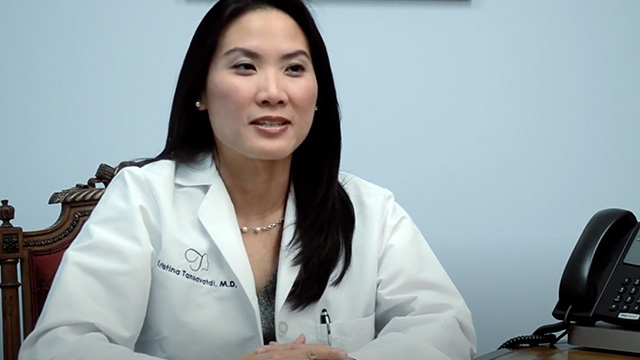
Dr. Kristina Tansavatdi Talks: What is Revision Rhinoplasty?

video thumbnail

What to Expect From Your Revision Rhinoplasty

An Honest Consultation

Your revision rhinoplasty journey begins with an in-person consultation with Dr. Kristina Tansavatdi. Revision rhinoplasty requires a detailed evaluation of the nose, breathing function, prior surgical history, scar tissue, skin thickness, cartilage support, and realistic goals. During consultation, Dr. Tansavatdi will listen to your concerns and review what is bothering you most. She may also review preoperative photos, operative reports, prior imaging, or records from your original surgeon when available. The consultation is designed to answer several important questions:

  • Has the nose fully healed from the previous surgery?
  • Is the concern significant enough to justify another operation?
  • Is there enough structure to support a revision?
  • Is breathing affected?
  • Is scar tissue or thick skin limiting what can be achieved?
  • Would cartilage grafting or donor rib cartilage be needed?
  • Are the patient’s goals realistic?
  • Would surgery improve the concern enough to be worth the risk?

Dr. Tansavatdi will be direct about what revision rhinoplasty can and cannot accomplish.

Reviewing Your Previous Surgery

Whenever possible, Dr. Tansavatdi will review the details of your prior rhinoplasty. This may include operative reports, photos before and after surgery, and information about whether cartilage grafts were used. This history matters because revision rhinoplasty depends heavily on what was done before. Prior cartilage removal, graft placement, scar formation, or structural weakening can affect the plan.

If your primary rhinoplasty was performed by another surgeon, Dr. Tansavatdi will approach your case without judgment. Her focus is on understanding the current anatomy and determining what is safest and most appropriate moving forward.

Customizing Your Surgical Approach

Revision rhinoplasty in Westlake Village may be performed through an open or closed approach, depending on the anatomy, prior surgery, and goals of the procedure.

  • Open revision rhinoplasty uses a small incision along the columella, the tissue between the nostrils, to provide greater visibility of the nasal structures. This approach is often used in more complex revision cases, especially when cartilage grafting, structural support, or tip reconstruction is needed.
  • Closed revision rhinoplasty uses incisions inside the nostrils. This may be appropriate for select cases with more limited concerns, but it is not suitable for every revision patient.

Dr. Tansavatdi will choose the approach based on what allows the safest access and best structural correction.

Cartilage Grafting and Structural Repair

Revision rhinoplasty often requires rebuilding support. If prior surgery removed too much cartilage, weakened the nasal valve, over-reduced the bridge, or compromised the tip, cartilage grafting may be needed. 

Grafts can help restore shape, reinforce breathing support, rebuild weakened areas, or create a more stable nasal framework. Cartilage sources may include:

  • Septal cartilage, if enough remains
  • Ear cartilage
  • Donor rib cartilage in more complex cases
  • Fascia or soft tissue grafts when needed for contour camouflage or softening irregularities

The choice of graft material depends on how much support is needed, what cartilage is available, and the goals of the revision.

Designed for Your Comfort and Safety

Revision rhinoplasty is typically performed at an accredited outpatient surgical facility under general anesthesia. Because revision surgery can be more complex and less predictable than primary rhinoplasty, careful planning and communication with the surgical and anesthesia teams are important. Before surgery, Dr. Tansavatdi and her team will review your health history, medications, prior surgery details, and recovery expectations. You will receive instructions on how to prepare, what to stop before surgery, and what to expect during healing.

Shelf decor

Recovery After Revision Rhinoplasty

Recovery after revision rhinoplasty in Westlake Village is often longer and less predictable than recovery after primary rhinoplasty. Swelling may last longer because of scar tissue, thickened skin, grafting, and the fact that the nose has already been operated on. Most patients can expect swelling, bruising, congestion, tenderness, and pressure around the nose and eyes during early recovery. A splint may be placed to protect the nose during initial healing.

Many patients take about one to two weeks away from work or social activities, depending on swelling, bruising, and the extent of surgery. Strenuous activity, contact sports, heavy lifting, and pressure on the nose must be avoided for a longer period. Final results can take 18 months or longer to fully develop. In patients with thicker skin or extensive scar tissue, refinement may continue to evolve slowly over two years.

Banner media

Personalizing Your Post-Operative Experience

After surgery, Dr. Tansavatdi and her team will provide a customized recovery plan based on the details of your revision rhinoplasty. Your instructions may include:

  • Incision care
  • Splint care
  • Nasal cleaning instructions
  • Medication guidance
  • Activity limitations
  • Sleep position recommendations
  • Sun protection
  • Swelling management
  • When to avoid glasses or pressure on the nose
  • When to resume exercise
  • Follow-up appointment schedule
  • Signs or symptoms to monitor

Follow-up appointments allow Dr. Tansavatdi to monitor healing, remove splints or sutures when appropriate, assess swelling, and guide you through the long healing process.

Results: Improvement, Not Perfection

Revision rhinoplasty results take patience. As swelling fades and tissues soften, the nose should gradually reveal improved structure, contour, function, or balance. However, revision rhinoplasty must be approached with realistic expectations. The nose has already been changed by prior surgery, and scar tissue may limit how much refinement is possible. Dr. Kristina Tansavatdi’s goal is to create meaningful improvement while preserving or restoring structural support. The best outcome is one that looks natural, functions well, and respects the limitations of the tissue. Revision rhinoplasty is not about perfection. It is about responsible correction.

Banner media

Stay Connected With Us

Revision Rhinoplasty Frequently Asked Questions

How soon after a primary rhinoplasty can I get a revision procedure?

Dr. Kristina Tansavatdi generally recommends waiting at least one year after primary rhinoplasty before considering revision surgery. In patients with thicker skin, prolonged swelling, or significant scar tissue, she may recommend waiting closer to two years. This waiting period allows the nose to heal, swelling to improve, and scar tissue to mature before another operation is considered.

Can I get revision rhinoplasty for minor asymmetry?

Usually, revision rhinoplasty is not recommended for very minor asymmetries. Small imperfections are often easier to address during primary rhinoplasty than during a second or third operation. Each additional surgery creates more scar tissue and can make the nose harder to refine. Dr. Tansavatdi will evaluate whether the concern is significant enough to justify the risks of another surgery.

Why is revision rhinoplasty harder than primary rhinoplasty?

Revision rhinoplasty is harder because the nose has already been surgically altered. Scar tissue, cartilage loss, weakened support, thickened skin, prior grafts, and changed anatomy all make surgery more complex. The nasal tip can be especially difficult to refine after prior surgery because the skin envelope may become thicker and less flexible.

Can Dr. Tansavatdi perform revision rhinoplasty if my first surgery was done by another surgeon?

Yes. Dr. Kristina Tansavatdi evaluates patients who had their original rhinoplasty performed elsewhere. However, she will first determine whether revision surgery is safe, realistic, and likely to provide meaningful improvement. Prior operative reports and preoperative photos can be helpful when available.

Will I need donor rib cartilage for revision rhinoplasty?

Possibly. Some revision rhinoplasty patients need cartilage grafting to rebuild nasal support, improve breathing, or correct collapse from prior surgery. If there is not enough usable cartilage remaining in the septum or ear, Dr. Kristina Tansavatdi may recommend donor rib cartilage. Donor rib cartilage is often considered in more complex or reconstructive revision rhinoplasty cases where the nose needs stronger structural support. Dr. Tansavatdi will discuss this during consultation if she believes grafting is necessary for a safe, stable, and natural-looking result.

Can revision rhinoplasty improve breathing?

Yes, revision rhinoplasty may improve breathing when obstruction is caused by nasal valve collapse, septal deviation, structural weakness, scar tissue, or collapse after prior surgery. Dr. Tansavatdi will evaluate both the appearance and function of the nose during consultation.

Will a revision rhinoplasty leave additional scarring?

Dr. Tansavatdi places incisions as discreetly as possible and may use prior incision patterns when appropriate. In open revision rhinoplasty, a small incision is typically placed along the columella. Scarring is usually discreet, but every patient heals differently, and prior surgery can affect scar behavior.

How long does revision rhinoplasty recovery take?

Early recovery usually takes one to two weeks, but swelling can last much longer after revision rhinoplasty. Final results may take 18 months or more to fully develop. Patients with thick skin or extensive scar tissue may continue to see changes for up to two years.

What results can I realistically expect?

The goal of revision rhinoplasty is meaningful improvement, not perfection. Dr. Kristina Tansavatdi will explain what can reasonably be improved, what limitations exist, and whether the expected benefit is worth the risk of another surgery.

What if Dr. Tansavatdi does not recommend surgery?

If Dr. Tansavatdi believes revision rhinoplasty is not the safest or most appropriate choice, she will explain why. In some cases, the best recommendation may be to wait longer, avoid surgery, or consider non-surgical support if appropriate. Her priority is protecting your long-term nasal structure, breathing, and overall outcome.

Enjoy Woman-Centered Aesthetic Care Schedule a Conversation

You deserve a plastic surgeon who sees you for who you truly are. Contact Dr. Tansavatdi today to learn more about her practice and schedule your private consultation.

Contact Us
Contact us media
Accessibility: If you are vision-impaired or have some other impairment covered by the Americans with Disabilities Act or a similar law, and you wish to discuss potential accommodations related to using this website, please contact our Accessibility Manager at (805) 243-0640.
Contact Us