
Droopy Eyelid Surgery for a More Open, Alert Expression

Heavy or drooping upper eyelids can make the eyes look tired, sleepy, or less expressive. In some patients, the eyelid droops low enough to interfere with vision. In others, the concern is more subtle: the eyes simply do not look as open, bright, or awake as they once did.

At Tansavatdi Facial Plastic Surgery, Dr. Kristina Tansavatdi evaluates droopy eyelids with a careful understanding of the brow, upper eyelid skin, eyelid muscle function, and upper eyelid volume. Many patients believe their heavy eyelids are caused only by excess skin, when the true issue may be ptosis — a condition in which the upper eyelid sits too low because the lifting muscle has weakened, stretched, or detached from its normal position. Ptosis repair in Thousand Oaks is often combined with upper eyelid surgery, also known as upper blepharoplasty, because excess skin and eyelid muscle weakness frequently occur together. The goal is to create a more open, alert, and natural-looking eye area while preserving your expression and facial identity.

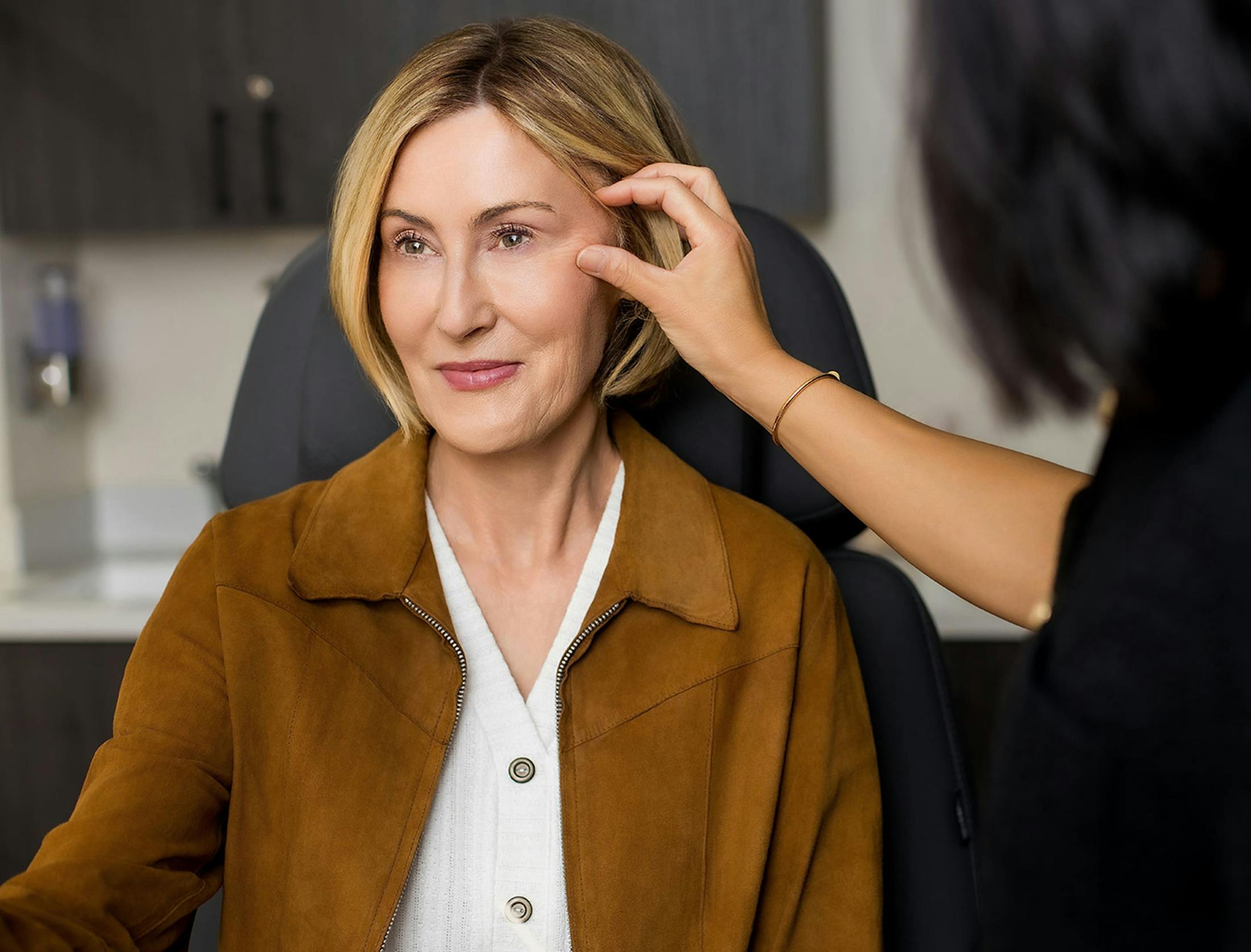
woman smiling

Why Droopy Eyelids Are Not Always Just Excess Skin

Many patients come in asking for upper eyelid surgery because they notice heaviness, hooding, or a tired appearance around the eyes. But not every “heavy eyelid” is caused by loose skin alone. A droopy upper eyelid may be caused by:

  • Excess upper eyelid skin
  • Brow descent
  • True eyelid ptosis
  • Weakness or stretching of the levator muscle
  • Loss of upper eyelid volume
  • Asymmetry between the two eyes
  • Prior eyelid surgery
  • Contact lens wear or age-related levator changes
  • A combination of several factors

This distinction matters. Upper blepharoplasty removes excess skin. Ptosis repair adjusts the eyelid lifting mechanism. Brow lift repositions the brow. Fat grafting can restore volume to the upper eyelid sulcus. Each procedure addresses a different cause of heaviness. Dr. Kristina Tansavatdi’s role is to identify what is actually contributing to your eyelid concern so the treatment plan is matched to the anatomy.


What Is Ptosis Repair?

Ptosis repair is a surgical procedure that elevates a drooping upper eyelid by adjusting the muscle responsible for lifting the eyelid. This muscle is called the levator muscle. When the levator muscle becomes stretched, weakened, or detached from the tarsal plate, the eyelid can sit too low. Dr. Kristina Tansavatdi most often performs ptosis repair using an external approach. Through an incision placed in the upper eyelid crease, the levator muscle is shortened, tightened, and reattached to the tarsal plate to improve eyelid height and symmetry.

Ptosis repair may help improve:

  • Drooping upper eyelids
  • Uneven eyelid height
  • A sleepy or tired appearance
  • Visual obstruction caused by low eyelid position
  • Brow strain from compensating for heavy eyelids
  • Eye fatigue in select patients
  • Upper eyelid asymmetry
  • A more open and alert expression

Ptosis repair in Westlake Village is functional and aesthetic. It can help improve vision when the eyelid blocks the visual field, but it also has a powerful effect on how awake, engaged, and expressive the eyes appear.

Schedule a Consultation

(805) 243-0640 Contact Us
Contact us media

A Surgery of Millimeters

Ptosis repair is an intricate procedure. Small adjustments can make a visible difference. The eyelid is measured and adjusted in millimeters, which means precision is essential. Dr. Kristina Tansavatdi must determine how much to shorten or tighten the levator muscle while accounting for tissue behavior, swelling, anesthesia effects, eyelid symmetry, and healing. This is why patients need realistic expectations. Even with careful technique, ptosis repair has a known possibility of revision. In Dr. Tansavatdi’s experience and in general ptosis surgery planning, revision may be needed in approximately 8 to 15 percent of cases. This does not mean the surgery is unsuccessful. It reflects the delicate nature of eyelid height, healing, and symmetry. The eyelid position can be affected by swelling, local anesthesia, muscle response, scar tissue, and how the tissues settle after surgery.

a plant

Why Patients Are Awake During Ptosis Repair

Ptosis repair is typically performed with the patient awake using local anesthesia, often with light sedation depending on the case. This allows Dr. Kristina Tansavatdi to assess eyelid height and symmetry during surgery. Being able to ask the patient to open the eyes during the procedure helps guide the adjustment of the levator muscle. This real-time assessment is one of the reasons the external approach can be so precise.

However, the process is still imperfect. Local anesthesia and swelling can temporarily change eyelid position during surgery. Sometimes anesthesia can create a false improvement in eyelid opening, making the eyelid appear more elevated than it may be once everything has healed. Swelling can also distort symmetry during the procedure. For this reason, ptosis repair requires experience, judgment, and honest preoperative counseling. The goal is to get the best possible symmetry, but perfect symmetry can never be guaranteed.

Logo media

Ptosis Repair and Upper Blepharoplasty

Ptosis repair in Thousand Oaks is commonly combined with upper blepharoplasty. Many patients have both excess upper eyelid skin and a low eyelid position. If only the excess skin is removed, the eyelid may still look droopy because the levator muscle was not corrected. Conversely, if ptosis repair is performed without addressing significant skin excess, the upper eyelid may still appear heavy. Combining ptosis repair with upper eyelid surgery allows Dr. Kristina Tansavatdi to address both the eyelid muscle and the excess skin in one procedure when appropriate. This combination can create a more complete improvement in the upper eyelid area while maintaining a natural, rested appearance.

Ptosis Repair With Brow Lift, Facelift, Neck Lift, and Full Face Rejuvenation

The eyes do not age in isolation. Eyelid heaviness may be influenced by brow position, forehead support, upper eyelid skin, volume loss, and changes throughout the face. For this reason, ptosis repair may be performed as part of a larger facial rejuvenation plan. Dr. Kristina Tansavatdi often evaluates ptosis repair in combination with:

  • Upper blepharoplasty
  • Brow lift
  • Lower eyelid surgery
  • Facial fat transfer
  • Deep plane facelift
  • Neck lift
  • Full face rejuvenation

When ptosis repair is combined with full facial rejuvenation, the goal is to create harmony between the eyes, brow, cheeks, lower face, and neck. A more open eyelid can help the face look more awake and engaged, while the surrounding procedures support a balanced, natural-looking result.

Banner media

Fat Grafting as an Alternative or Supportive Option

Not every patient with upper eyelid heaviness needs ptosis repair. In some cases, the eyelid may appear heavy because of volume loss in the upper eyelid sulcus. When the upper eyelid becomes hollow, the levator mechanism may appear more visible or the eyelid may not glide as smoothly. In select patients, fat grafting to the upper eyelid area can help replenish lost volume and improve the way the eyelid tissues move.

Dr. Kristina Tansavatdi sometimes describes this as helping “lubricate” the levator mechanism by restoring volume around it. This can improve eyelid function and appearance in the right patient. However, fat grafting does not replace ptosis repair when true levator weakness or detachment is present. It is an alternative or supportive option only when the anatomy suggests that volume loss is contributing to the concern.

Doctor media

The Tansavatdi Difference

Dr. Kristina Tansavatdi is a double board-certified, fellowship-trained facial plastic surgeon who specializes in the face and neck. Her approach to ptosis repair is rooted in detailed anatomy, careful measurement, natural-looking results, and honest communication. At Tansavatdi Facial Plastic Surgery, patients are not treated with a one-size-fits-all eyelid procedure. Dr. Tansavatdi evaluates the upper eyelids, brows, facial balance, volume changes, and expression before recommending a surgical plan. Her practice philosophy centers on helping patients recognize themselves again — not changing their identity, but restoring a natural sense of openness, confidence, and vitality. For many patients, ptosis repair is deeply satisfying because it can make the eyes look more alert, awake, and engaged. But the procedure must be approached with the respect it deserves: it is delicate, detailed, and sometimes requires revision to achieve the best possible eyelid position.

What to Expect From Your Ptosis Repair

An In-Depth Consultation

Your ptosis repair journey begins with a detailed consultation with Dr. Kristina Tansavatdi. She will evaluate your eyelid height, levator muscle function, brow position, eyelid skin, upper eyelid volume, facial symmetry, and any visual symptoms. She will also determine whether your concern is caused by true ptosis, excess skin, brow descent, volume loss, or a combination. Your consultation may include discussion of:

  • Ptosis repair
  • Upper blepharoplasty
  • Brow lift
  • Facial fat transfer
  • Whether surgery should be combined with full facial rejuvenation
  • The possibility of revision
  • Functional symptoms such as visual obstruction or eye fatigue
  • Realistic expectations for eyelid symmetry

The goal is to create a plan that matches the cause of the drooping.

Designed for Precision

Ptosis repair is usually performed through an external approach using an incision in the upper eyelid crease. This allows Dr. Tansavatdi to access the levator muscle, shorten or tighten it, and reattach it to the tarsal plate.

Because eyelid height is adjusted in millimeters, the procedure is performed with the patient awake enough to open the eyes during surgery. This helps Dr. Tansavatdi assess eyelid elevation and symmetry in real time.

In many cases, excess upper eyelid skin can also be removed during the same procedure if upper blepharoplasty is being performed.

Strategic Muscle Adjustment

During surgery, Dr. Tansavatdi carefully adjusts the levator muscle to improve eyelid height. The amount of tightening is customized based on levator function, degree of ptosis, anatomy, and intraoperative eyelid position. This is where the complexity of ptosis repair becomes important. The eyelid position seen during surgery may be affected by swelling or local anesthesia. While intraoperative adjustment is valuable, final symmetry can only be fully judged after healing. This is why follow-up and realistic expectations are essential.

Recovery After Ptosis Repair

Recovery after ptosis repair typically includes swelling, bruising, tightness, irritation, and temporary asymmetry as the eyelids heal. The eyes may feel dry or more sensitive during the early recovery period.

Most patients return to light daily activities within one to two weeks, depending on bruising and swelling. Strenuous activity, heavy lifting, contact sports, swimming, and eye makeup are usually restricted for a period of time. If ptosis repair is combined with upper blepharoplasty, brow lift, facelift, neck lift, or full face rejuvenation, your recovery timeline will reflect the combined surgical plan.

dr light

Your Post-Operative Process

After your procedure, our team will provide detailed aftercare instructions based on your surgery.
Your instructions may include:

  • Incision care
  • Eye drop or ointment use
  • Cold compress guidance
  • Activity limitations
  • Sleep position recommendations
  • Hygiene instructions
  • Sun protection
  • When to resume makeup
  • Swelling and discomfort management
  • Follow-up appointment schedule
  • Signs or symptoms to monitor

Dr. Tansavatdi will monitor your healing closely. Eyelid position can change as swelling resolves, so follow-up is an important part of the process.

Results: A More Open, Alert Eye Area

Ptosis repair in Westlake Village can create a meaningful improvement in the way the eyes look and function. Many patients feel they look more awake, more engaged, and more aligned with how they feel inside. Some improvement may be visible early, but final results take time as swelling resolves and the eyelid position settles. Because ptosis repair is a surgery of millimeters, small differences may still exist between the two eyelids. In some cases, revision may be recommended if eyelid height, contour, or symmetry needs further refinement. The goal is a natural-looking improvement that helps the eyes appear more open and expressive without looking overdone.

Banner media

Ptosis Repair Frequently Asked Questions

How do I know if I have ptosis or just excess eyelid skin?

Many patients cannot tell the difference on their own. Excess eyelid skin creates heaviness or hooding, while ptosis means the upper eyelid itself sits too low because of levator muscle weakness, stretching, or detachment. During consultation, Dr. Kristina Tansavatdi will evaluate eyelid height, skin excess, brow position, levator function, and upper eyelid volume to determine the true cause.

Is ptosis repair usually combined with upper blepharoplasty?

Yes. Ptosis repair is often combined with upper blepharoplasty because many patients have both drooping eyelids and excess upper eyelid skin. Combining the procedures can address both muscle function and skin heaviness in one surgical plan.

How is external ptosis repair performed?

External ptosis repair is performed through an incision in the upper eyelid crease. Dr. Tansavatdi accesses the levator muscle, shortens or tightens it, and reattaches it to the tarsal plate to improve eyelid height.

Why do I need to be awake during ptosis repair?

Ptosis repair is often performed with the patient awake enough to open the eyes during surgery. This allows Dr. Tansavatdi to assess eyelid elevation and symmetry in real time. However, swelling and local anesthesia can affect the eyelid position during surgery, so final results are evaluated after healing.

What is the revision rate for ptosis repair?

Because ptosis repair is a surgery of millimeters, revision may be needed in approximately 8 to 15 percent of cases. This can happen because of healing differences, swelling, anesthesia effects, asymmetry, muscle response, or how the eyelid settles after surgery.

Will ptosis repair change the shape of my eyes?

Ptosis repair changes the height of the upper eyelid, which can make the eyes look more open and alert. The goal is not to change your eye shape, but the eye area may appear different because more of the eye is visible.

Can fat grafting replace ptosis repair?

Not when true ptosis is present. Fat grafting may help select patients whose upper eyelid heaviness or dysfunction is related to volume loss in the upper eyelid sulcus. Restoring volume can sometimes improve the way the eyelid tissues glide, but it does not replace ptosis repair when the levator muscle needs to be tightened or reattached.

Can ptosis repair be combined with brow lift or facelift surgery?

Yes. Ptosis repair may be combined with brow lift, upper blepharoplasty, facelift, neck lift, facial fat transfer, or full face rejuvenation when appropriate. Dr. Tansavatdi will evaluate the entire upper face and facial structure to determine the best plan.

How long does recovery take after ptosis repair?

Most patients return to light daily activities within one to two weeks. Swelling and bruising gradually improve, but eyelid position can continue to settle over several weeks. Recovery may be longer if ptosis repair is combined with other facial rejuvenation procedures.

Will my eyelid droop again after surgery?

Ptosis repair is designed to provide long-lasting improvement, but recurrence is possible. Tissue quality, healing, aging, muscle function, and underlying medical conditions can all affect long-term stability. Dr. Tansavatdi will discuss your individual risk during consultation.

Enjoy Woman-Centered Aesthetic Care Schedule a Conversation

You deserve a plastic surgeon who sees you for who you truly are. Contact Dr. Tansavatdi today to learn more about her practice and schedule your private consultation.

Contact Us
Contact us media
Accessibility: If you are vision-impaired or have some other impairment covered by the Americans with Disabilities Act or a similar law, and you wish to discuss potential accommodations related to using this website, please contact our Accessibility Manager at (805) 243-0640.
Contact Us